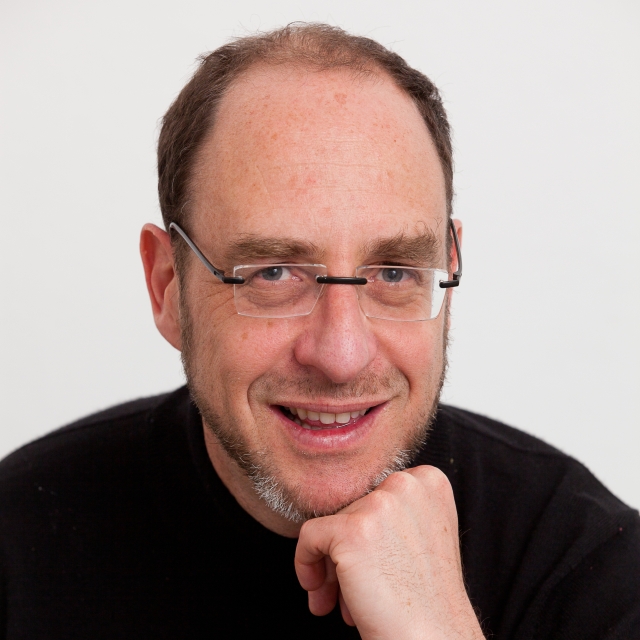
Hillel Braude, MD, PhD
is a Integrative Medicine Doctor, Feldenkrais Practitioner and Neuro-Ethicist. Hillel is the Founder-Director of SomaticWell, an Integrative Medicine Clinic providing specialized treatments for infants and children with autism, and other neurodevelopmental disabilities. Hillel has published extensively in the field of Neuroethics, Somatics and Philosophy of Medicine. He is the author of Intuition in Medicine: A Philosophical Defense of Clinical Reasoning (The University of Chicago Press, 2012). He is member of the Research Group Steering Committee.
Ulrike Dengl, MA
studied sociology, psychology and history of art. Focusing on how knowledge is being created in societies, she got involved and interested in Systems Theory and aspects of epistemology. Attending the Feldenkrais Teacher Training with Ulla Schläfke and Roger Rusell in Heidelberg 2008- 2012 and recently also their Graduate Program she was surprisingly thrown back into the systemical way of thinking. This background in combination with the refining somatic approach of the Feldenkrais Method has given her a fundamental basis for for her life as a piano- and feldenkrais teacher and mother.

Prof. Dr. Corinna Eikmeier
studied Violoncello, Contemporary Music and Improvisation. From 2007-2009 she was a Dorothea Erxleben scholar, working on a project about Feldenkrais and improvisation. She continued this as her PHD project at Universität für Musik und Darstellende Kunst Vienna. Title of her dissertation: “Movement quality and music practice. About the relationship between the Feldenkrais Method and musical improvisation”. Since 2020 she is professor for instrumental- and voice pedagogy at Musikhochschule Lübeck. www.corinna-eikmeier.de
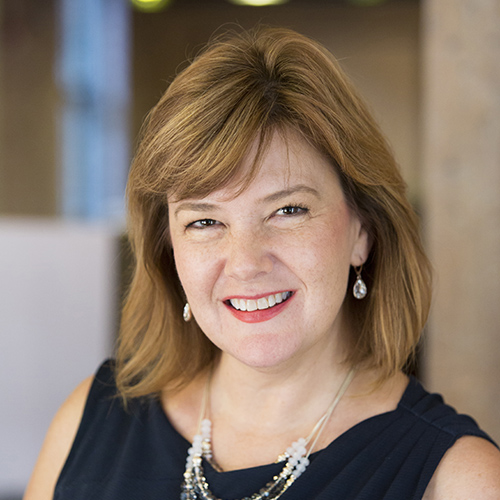
Diane Hannemann, PhD
is an integrative health strategist and biochemist with more than 20 years of experience translating science to inform federal policy, innovative research programs, partnerships, and communications to improve health. Fascinated by molecules as the communicators of life, she received her PhD in molecular biophysics and biochemistry from Yale University. Earlier this year, she completed the Feldenkrais Training Program of Baltimore in the US.
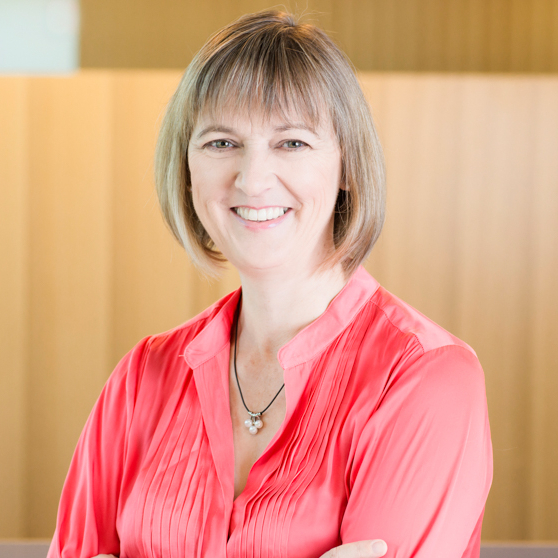
Susan Hillier, PhD
Professor Susan Hillier is Dean: Research at the University of South Australia. She is also a Feldenkrais Practitioner (Melbourne 1991) and Trainer. Her personal practice, teaching and research have a broad focus on the neuroscience of sensing and moving – in particular for people who have sustained an injury or illness that impacts their function in daily life.
Stéphanie Ménasé, PhD
Researcher in philosophy and painter, having worked for different publishers for many years (France), she is the author of a book Passivité et création, PUF, 2003, and of many articles, notably, around the philosophy of Merleau-Ponty and others in relation to the Feldenkrais Method ; attending the Method as a “user” since 1991, she is certified since 2012; she has developed, during these years, an understanding of the practice of Feldenkrais as a research on human skills. She teaches Feldenkrais in French and English.

Roger Russell, MA, PT
is a Feldenkrais Trainer in Heidelberg, Germany, and part of the Research Group Steering Committee. He had the luck to participate in the San Francisco and Amherst trainings with Moshe Feldenkrais between 1975 and 1981. Roger was a coordinator in the FEFNA conferences Movement and the Development of Sense of Self (2004) and Embodying Neuroscience (2012). He has presented in conferences in Paris, Oxford, Berlin and Heidelberg.
Liz Senn, PhD
Liz’s interests lie in infant and neurodevelopment. She graduated as a Feldenkrais practitioner in 2022 and is working towards opening a practice working with children. She is part of the Research Group Steering Committee and lead the database task group updating current articles and searchability of the Feldenkrais database. She is also a member of the National Council of the Australian Feldenkrais Guild. Her PhD investigated the relationship between both maternal and infant gut bacteria and infant neurodevelopment. As part of her PhD, she has presented in conferences in Australia and in Detroit.

Cliff Smyth, PhD
Cliff has been practicing Feldenkrais Method for 30 years. As a member of the IFF Board and more recently the Research Group Steering Committee, he was involved in starting the IFF’s research lists, the Feldenkrais Research Journal, and the current research network initiatives. He is a Faculty Member in the Department of Mind-Body Medicine at Saybrook University. He is the editor of the Feldenkrais Research Journal.
Jim Stephens PhD, PT, CFP
Jim Stephens finished his PhD in Neuroscience and a clinical degree in Physical Therapy before becoming a Feldenkrais practitioner, completing the Toronto training in 1987. He has worked in clinical practice using both Feldenkrais method and physical therapy and continues to do a small clinical practice. He has published a number of peer reviewed papers on Feldenkrais Method including case studies.
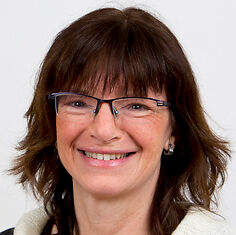
Beatrix Vereijken, PhD MSc in Experimental Psychology (1987), PhD in Human Movement Science
Since 1997 she has been professor in at the Norwegian University for Science and Technology in Trondheim. Her PhD dissertation is a classic, and is cited in many kinesiology and movement science textbooks. Her scientific output consists of more than 300 international publications and presentations since 1994.
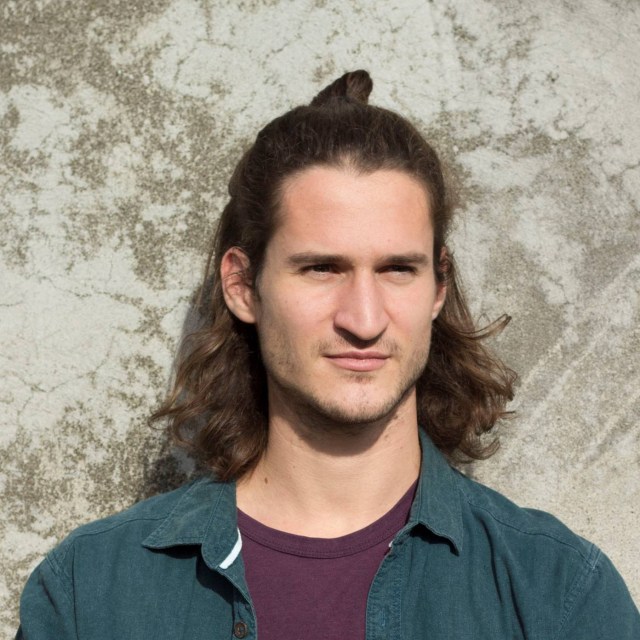
Nicola Zollinger, Bsc (Environmental System Science)
completed his studies in Environmental System Sciences in Zurich and graduated from his Feldenkrais Training in 2021. He worked as an assistant to a lecture of mathematical System Analyses at his university, where he gained a deeper understanding of complex natural systems. He wrote the content for a series of videos that explain the Feldenkrais Method to the public. He is also conducting a narrative review in the areas of “Function, Balance, Mobility”, “Pain Management” and “Psychosomatics”, in order to gather the knowledge of Feldenkrais Studies in these areas and to start elaborating a theory for a working mechanism.
 International Feldenkrais Federation Research Network